
For the progress of any community, it is important to sit with people and work on small, everyday challenges. How a simple effort can transform lives can be clearly seen through the street light installation project implemented with the support of Signify Lighting Innovation in the villages surrounding the Valmiki Tiger Reserve, located near the Nepal border in West Champaran district of Bihar. Street lighting may seem like a very basic intervention, but how a single light can change lives is something we can truly understand through these two stories.
In a small village near the forest fringe, evenings once brought a sense of fear and restriction for Ganga and Yamuna. As the sun set, life in their village would come to a halt. Families would shut their doors early, and the narrow pathways would disappear into complete darkness.
Coming from a financially weak household, the sisters lived in a small two-room house where only one room had electricity. That single bulb had to serve multiple purposes—cooking, studying, and daily chores—all in one confined space. Stepping outside after dusk was almost unthinkable.
Often, sudden shouts would echo through the village—warnings that a wild animal had entered nearby. Living so close to the forest made such incidents common, and for young girls like Ganga and Yamuna, it was terrifying.
While a few street lights existed, they were mostly installed near shops or the houses of influential families.
Their settlement, like many others without social or economic influence, remained neglected—especially the areas near orchards and open land where animals frequently wandered.
Things began to change when teams started identifying high-risk and underserved areas. For the first time, their locality was recognized. The day street lights were installed in their lane marked a turning point.
“When the light first came on outside our house, our fear disappeared,” Ganga recalls. Their mother often says that animals tend to avoid well-lit areas, bringing a sense of reassurance to the family.
Ganga also shares how her friend from the nearby Musahar settlement experienced a similar transformation. In that community, where even a single bulb inside homes was a luxury, the installation of street lights brought unexpected change.
“Now they study and even play under those lights at night,” she says with a smile.
For Ganga and Yamuna, light did more than illuminate their surroundings—it gave them confidence, freedom, and a childhood no longer confined by fear.
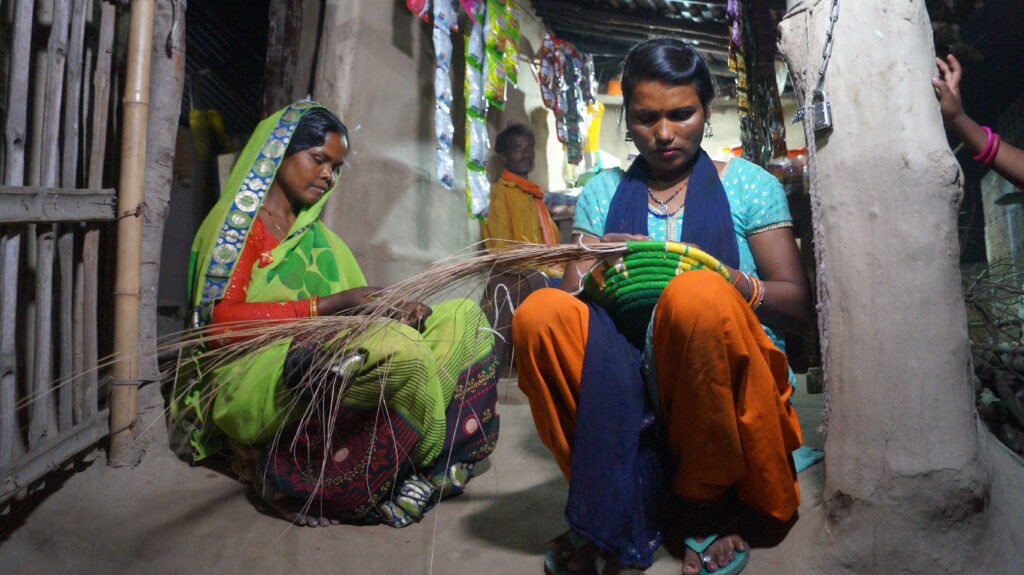
In the Haranatand range, the Taruanwa Musahar community has long relied on traditional crafts for survival. Families here are skilled in making brooms and bamboo baskets—products that see seasonal demand, especially during weddings and festivals. Alongside this, broom-making remains a steady source of livelihood throughout the year.
However, one major challenge limited their growth: time. Their work was entirely dependent on daylight. When bulk orders arrived during peak seasons, completing them on time became a struggle.
As evening approached, work would slow down and eventually stop—not just due to fatigue, but because working in darkness was both difficult and unsafe
Inside their small huts, a single dim bulb often struggled to provide enough light for detailed handwork. Managing large orders in such conditions was nearly impossible. This limitation directly impacted their income, preventing them from accepting more work even when opportunities were available.
The installation of street lights brought a quiet yet powerful transformation. With well-lit surroundings, the community gained extra working hours after sunset. What was once lost time turned into productive time.
Now, families come together in the evenings, sitting under the glow of street lights, continuing their craft work safely and comfortably. The fear of darkness has reduced, and so has the hesitation to step outside at night.
This extended work time has allowed them to accept more orders and complete them efficiently. As a result, their income has improved, and so has their confidence.
For the Musahar community, these lights are not just about visibility—they represent opportunity, dignity, and the ability to shape a better future.
Today, when you see a street light glowing in the evening, your perspective might change. In urban areas, a light at the corner of a street may simply feel like a basic necessity—something we rarely think about. Yet even there, it provides a sense of safety and comfort.
Now imagine its value in villages located near dense forests. Here, a single light does much more—it reduces fear, enhances safety, supports livelihoods, and enables children to study after dark. It transforms not just spaces, but lives.
In these villages near Valmiki Tiger Reserve, street lights have become symbols of change. They are helping communities move from fear to confidence, from limitation to opportunity.
Sometimes, all it takes is a little light to change everything.
