
Sports for Youth Empowerment
Building Pathways to Confidence, Careers, and Community Leadership
At FINISH Society, we believe sports are a powerful tool for holistic youth development—especially in rural and underserved communities. Beyond physical fitness, sports nurture discipline, confidence, teamwork, leadership, and resilience, creating pathways to education, livelihoods, and social mobility.
In regions where opportunities are limited and talent often goes unnoticed, structured sports programmes can become life-changing platforms. Our work in Nirsa, Jharkhand reflects this belief—transforming playgrounds into spaces of aspiration and potential.
Why Sports for Rural Youth?
Rural youth often face barriers such as lack of exposure, infrastructure, coaching, and financial support. As a result, raw talent remains untapped.
Through sports, we aim to:
- Provide equal access to opportunities regardless of socio-economic background
- Channel youthful energy into positive, disciplined engagement
- Build confidence, life skills, and leadership qualities
- Open pathways to education, employment, and professional sports careers
Sports are not just games—they are tools for social transformation.
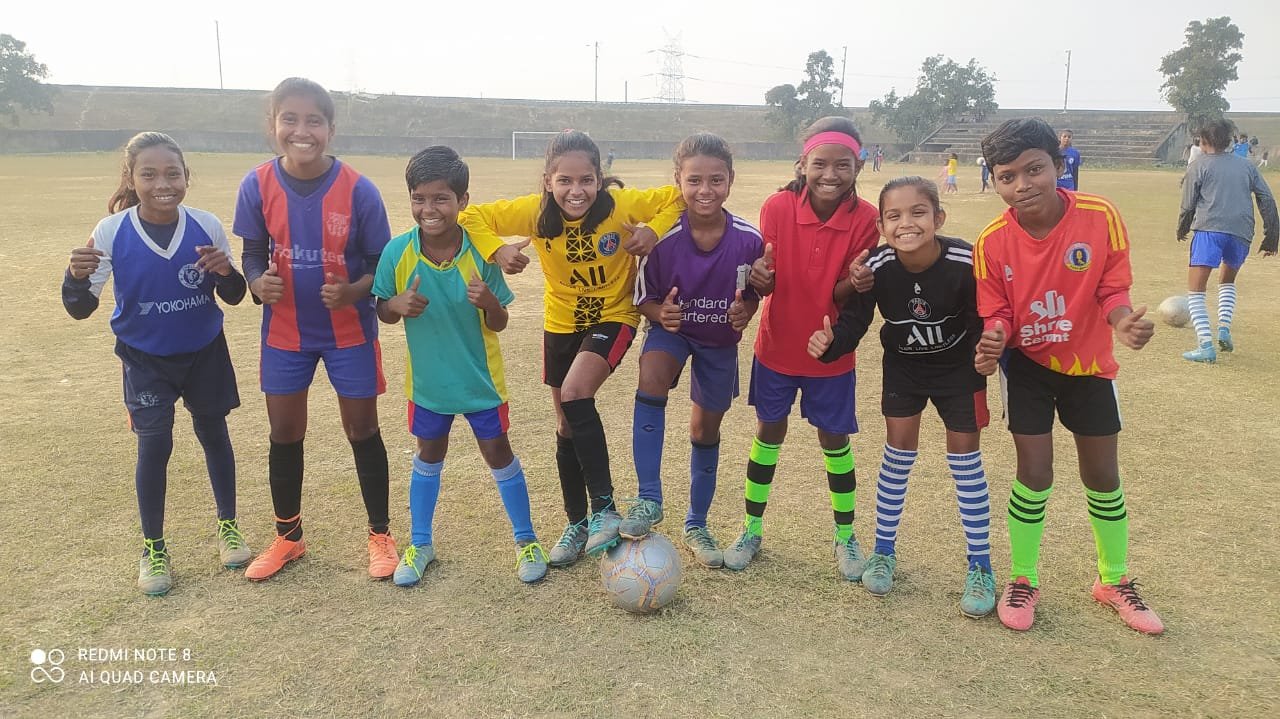
How We Do It
FINISH Society implements structured grassroots sports programmes with a long-term development lens:
- Creation of local sports infrastructure: Development of village-level and cluster-based sports grounds
- Multi-sport training: Football, athletics, volleyball, kabaddi, boxing, archery and field events
- Professional coaching & mentorship: Engagement of trained and national-level coaches
- Regular practice & competitions: Exposure to district, state, and national tournaments
- Holistic development: Focus on discipline, time management, teamwork, and goal setting
- Inclusion & access: Encouraging participation of children from marginalised and low-income families, including girls
AGRIVATION – Why Agriculture Is Our Focus
Agriculture is not merely an economic activity; it is the foundation of food systems, ecological balance, and human well-being. Regardless of technological advancement, food security will always depend on healthy soils and resilient agricultural systems.
Current agricultural practices, largely driven by short-term yield maximisation, have led to soil organic carbon depletion, loss of soil biodiversity, nutrient imbalance, and increased greenhouse gas emissions. These changes directly impact crop nutritional quality, environmental sustainability, and long-term farm viability.
Through AGRIVATION, FINISH Society focuses on restoring the soil–plant–environment continuum, ensuring that agriculture contributes not only to productivity but also to ecosystem regeneration and climate resilience.
Why Bio-Compost & Organic Resource Recycling Matters
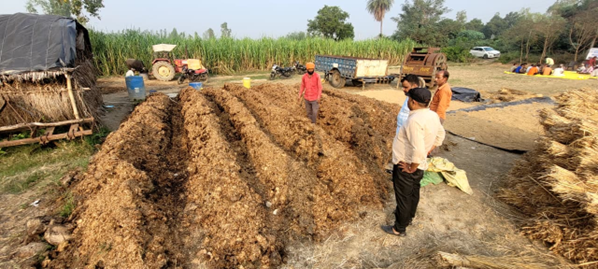
FINISH Society has developed strong expertise in rapid conversion of diverse organic resources—agro-waste, dung, crop residues, and biomass—into high-quality compost. This approach is supported by agronomic and soil science research, which confirms that organic carbon–based inputs:
- Activate and enhance soil microbial activity
- Improve Nutrient Use Efficiency (NUE) and nutrient availability
- Strengthen soil structure, aggregation, and moisture retention
- Reduce dependence on synthetic chemical fertilisers
Beyond soil improvement, organic resource recycling plays a critical role in climate-smart agriculture by reducing residue burning, lowering emissions, and closing nutrient loops. It is not merely a waste management solution, but a circular economy approach that strengthens soil health, farm economics, and environmental outcomes simultaneously.
Alignment with the FINISH Mission
AGRIVATION is closely aligned with FINISH Society’s mission of delivering people-centric, ecosystem-based, and financially viable solutions.
Across sectors—sanitation, waste management, or agriculture—FINISH works to:
- Integrate scientific knowledge with community practices
- Enable local resource utilisation
- Build systems that deliver environmental sustainability, economic viability, and social impact
AGRIVATION extends this mission into the agricultural domain by positioning soil regeneration and farmer resilience at the centre of development interventions.
Our Way of Working
We focus on enabling systems, not prescribing solutions.
- Educate
Build scientific understanding of soil health, nutrient cycles, and climate-responsive agriculture. - Inform
Provide data-driven insights through soil diagnostics, advisory services, and evidence-based practices. - Demonstrate
Establish field demonstrations, pilot models, and peer-learning platforms to enable informed adoption. - Enable Adoption
Support scalable, affordable, and locally adaptable solutions through continuous engagement.
Core Expertise Areas
- Capacity Building & Training
Structured training for farmers, field teams, institutions, and community stakeholders on soil health, composting, and sustainable practices. - Community Mobilisation & Behaviour Change
Farmer mobilisation, lead practitioner development, and participatory approaches that encourage long-term adoption. - Applied Research & Knowledge Integration
Translation of scientific research, government frameworks, and field learnings into practical, scalable models. - Data Management & Monitoring
Collection, analysis, and utilisation of soil, practice, and impact data to guide decision-making and track outcomes.
Soil Health
Upjau Mati Pariyojana is being implemented by FINISH Society in collaboration with DCM Shriram Sugar Ltd. and DCM Shriram Foundation, with the objective of strengthening soil health and promoting sustainable agricultural practices at scale.
The initiative aims to work closely with over 1,000 farmers across 400 villages, supporting them in transitioning towards climate-resilient, resource-efficient, and soil-friendly farming systems. The programme focuses on reducing practices that degrade soil and the environment—such as crop residue burning—while enabling farmers to adopt scientifically guided, cost-effective alternatives.
Under this project, farmers are encouraged to avoid stubble (parali) burning and instead convert agricultural residues into high-quality organic compost by combining crop waste with cattle dung and applying bio-decomposer solutions. Alongside this, farmers are supported to adopt soil test–based fertiliser application, ensuring that nutrients are applied only as required, improving efficiency and reducing input costs. The programme also leverages appropriate technologies and field-based learning to upgrade farmers’ knowledge and decision-making capacity.
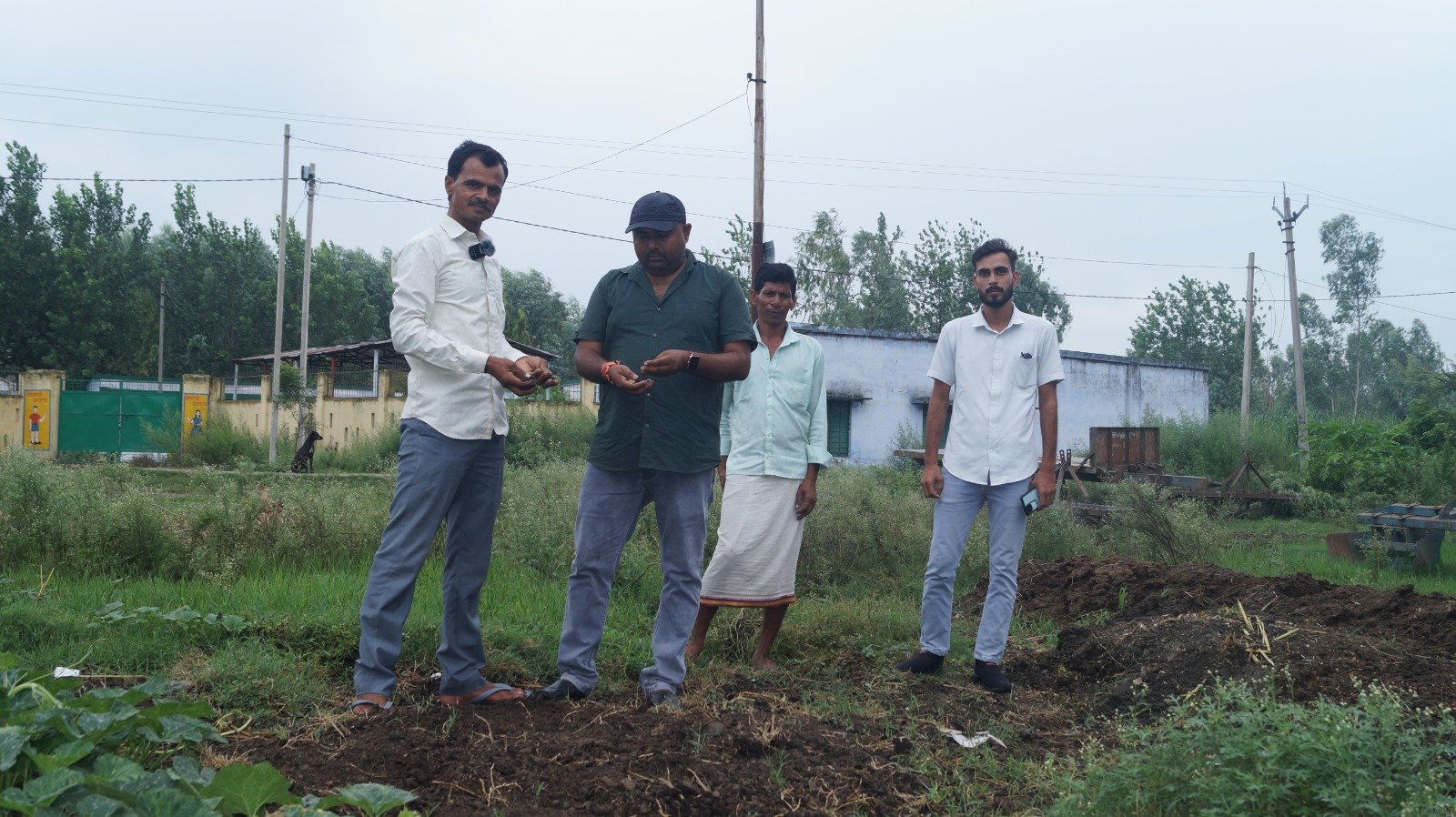
How We Are Implementing the Programme
- Residue Management & Composting
Promoting non-burning practices by converting crop residues and dung into organic manure using bio-decomposers. - Soil Testing & Scientific Advisory
Conducting soil tests and providing crop- and soil-specific nutrient recommendations to optimise fertiliser use. - Capacity Building & Knowledge Upscaling
Strengthening farmers’ technical understanding through training, demonstrations, and technology-enabled learning. - Community-Level Adoption & Scaling
Working village by village to encourage collective adoption of sustainable practices and long-term behaviour change.
