
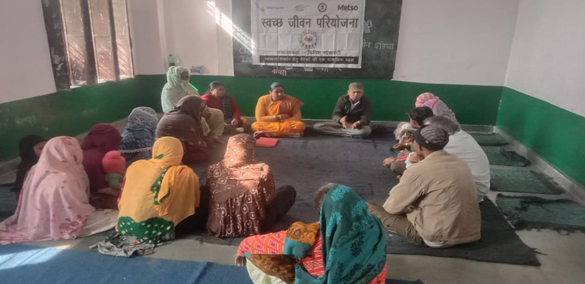
Mirasi ka Basa is a small hamlet in the Kesaroli Gram Panchayat of Ramgarh Block in Alwar district, Rajasthan. The roads are unpaved, resources are limited, and life is simple. Yet, in this simplicity, a powerful story of compassion, shared responsibility, and social change is taking shape—a story that can inspire even big cities and large institutions.
When the FINISH Society team first met with the School Management Committee (SMC) members and the community under the “Swachh Jeevan Project,” supported by Metso India, they introduced everyone to the project and discussed the renovation of the school toilets. During the meeting, Umesh Vishwakarma from FINISH Society suggested creating a “cleanliness fund” to ensure the regular use and maintenance of the toilets. The idea was that people could voluntarily contribute any small amount or support the school in any way they wished.
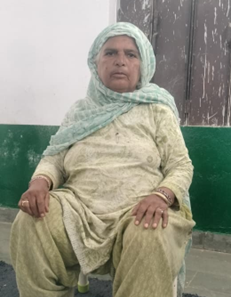
The first person to come forward was a 70-year-old elderly woman, lovingly known to everyone as Jhuma Dadi. Though age has slowed her body, her compassion and sense of responsibility towards the children and the community remain as strong as ever.
Age may have slowed her body, but her concern for society is still as strong as ever. She holds no official position and is not connected to any organization, yet her contribution to the Government Primary School is priceless. From time to time, she visits the school and quietly gives a small amount of money to the Headmistress, Ms. Laxmi Rani—sometimes ₹50, sometimes ₹100, sometimes ₹200.
This is not a formal donation. It is the loving care of a grandmother who worries about the children.
Her intention is simple—if the school needs to buy soap for handwashing, strengthen hygiene arrangements, there should be funds available immediately. She believes that small steps today build the foundation of health, dignity, and self-confidence for children. For her, education is meaningful only when a child feels safe and healthy.
The school itself is a beautiful example of community effort. A village family donated their land for its construction—an act not just of giving land, but of investing in the future of the next generation. Today, the children of the village study there and dream of becoming teachers, doctors, and responsible citizens who wish to improve their community.
At present, the school toilets are being renovated. Over the years, they had deteriorated, causing inconvenience—especially for girls. Along with renovation, ensuring reliable water supply was a major challenge.
Understanding this need, Ward Panch Shehnaz decided that a water pipeline would be laid to the school—and that the work must be completed as early as possible. At the same time, Bismillah ji, who lives near the school, stepped forward and said that she is installing a borewell at her house and will connect it to the school so the water tank always remains filled. Till then, a hand pump would continue to support water needs.
Giving structure and direction to these collective efforts is Umesh Vishwakarma, Project Manager at FINISH Society. For him, this is not just another project—it is an opportunity to bring real change into the lives of children. Under his leadership, this initiative is progressing as part of the “Swachh Jeevan Project” supported by Metso India. The goal is not only to build infrastructure but also to strengthen habits related to cleanliness, health, and dignity.
Along with improving sanitation facilities, the project also focuses on behavior change. Children are being taught the importance of washing hands, maintaining hygiene, and staying aware of health needs. Local inspirations like Jhuma Dadi give a human face to this project. When children see that an elderly grandmother thinks about them, they too begin to understand responsibility and respect.
What makes this story special is that there is no single hero. It is the love of Jhuma Dadi, the sensitivity of Headmistress Laxmi Rani, the generosity of the family who donated land, the commitment of the Panchayat, and the institutional support of FINISH Society and Metso India under the leadership of Umesh Vishwakarma all working together to make this change possible. This partnership shows that when communities and organizations walk in the same direction, sustainable solutions emerge—even with limited resources.
Mirasi ka Basa teaches us that social change does not always require big budgets or grand plans. Sometimes, ₹50 or ₹100, a timely decision, or a piece of donated land—these small acts create big impact. This story is a reminder that change is not someone else’s responsibility. Change begins with us.
And one day, when clean toilets are ready, when water flows freely, when children wash their hands with soap, and when girls come to school with dignity—every smile will carry a little imprint of Jhuma Dadi’s love.
Mirasi ka Basa may be just a small point on the map, but the lesson it gives travels far—that the path to cleanliness, education, and human dignity is built through collective effort.
