
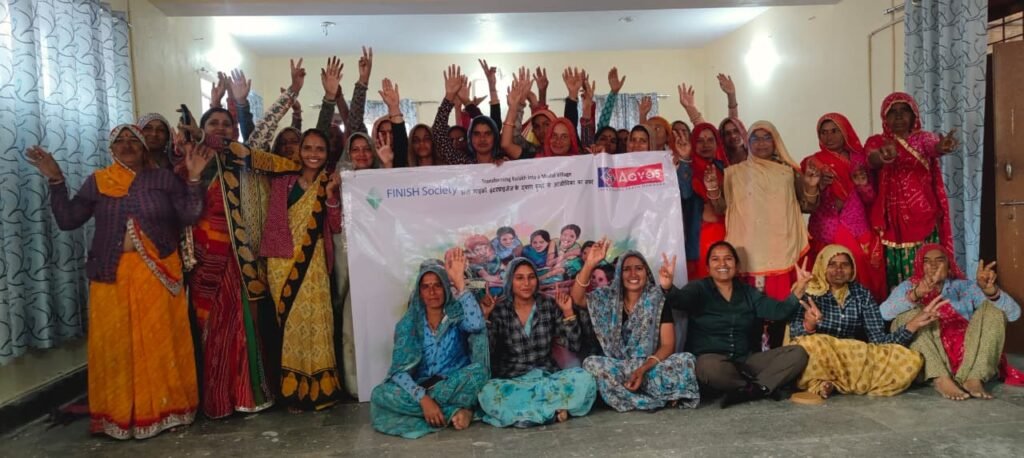
Every meaningful village transformation begins not with construction, schemes, or infrastructure, but with people. Before change can take shape on the ground, it must first take root in the minds and hearts of the community. With this understanding, FINISH Society, supported by the CSR initiative of AAVAS Financiers Limited, began its comprehensive village development programme in Kalakh village, Jobner block of Jaipur district, by placing community participation at the very centre of the process.
Kalakh is envisioned as a model village—clean, healthy, beautiful, and self-reliant—through integrated efforts in livelihoods, women empowerment, sustainable agriculture, WASH, sanitation, water conservation, waste management, nutrition, education, and healthcare. However, the first step was not implementation. It was building trust. The team recognised that unless the community believes that change is possible—and that they are responsible for sustaining it—no initiative can truly succeed.
During the initial visits, villagers expressed curiosity along with hesitation. Many had seen programmes begin with enthusiasm and disappear over time. These concerns shaped the approach of FINISH Society. Instead of launching activities immediately, the focus was placed on creating a shared starting point—one that symbolised unity, ownership, and collective responsibility. The decision to begin this journey on 26 January, India’s Republic Day, reflected this intent.
There were doubts, even from village leadership, about whether people would come together. Yet the team believed that participation is not about announcements; it is about inclusion. A culturally rooted approach was adopted—households were invited personally through akshat (yellow rice), a symbol of respect and belonging. The message was simple yet powerful: this initiative belongs to the people of Kalakh.
The response exceeded expectations. Nearly 600 villagers gathered, turning the event into a shared moment of hope and possibility. The nine thematic stalls showcased the proposed areas of work, but more importantly, they became spaces for dialogue. People asked questions, shared ideas, and began to see how their daily actions could shape their village’s future.
The participation of SHG women marked a defining moment. Five groups came forward to display their products, gaining recognition and confidence. Their presence reflected what this initiative stands for—local leadership, dignity of work, and collective growth.
This day was not the launch of activities; it was the launch of a process. A process where the community is not a beneficiary, but a partner. From planning and implementation to long-term maintenance and sustainability, the responsibility of Kalakh’s development rests with its people. January 26 thus became the foundation stone of a journey built on trust, participation, and shared ownership—because real development begins when communities believe, lead, and sustain change together.
