
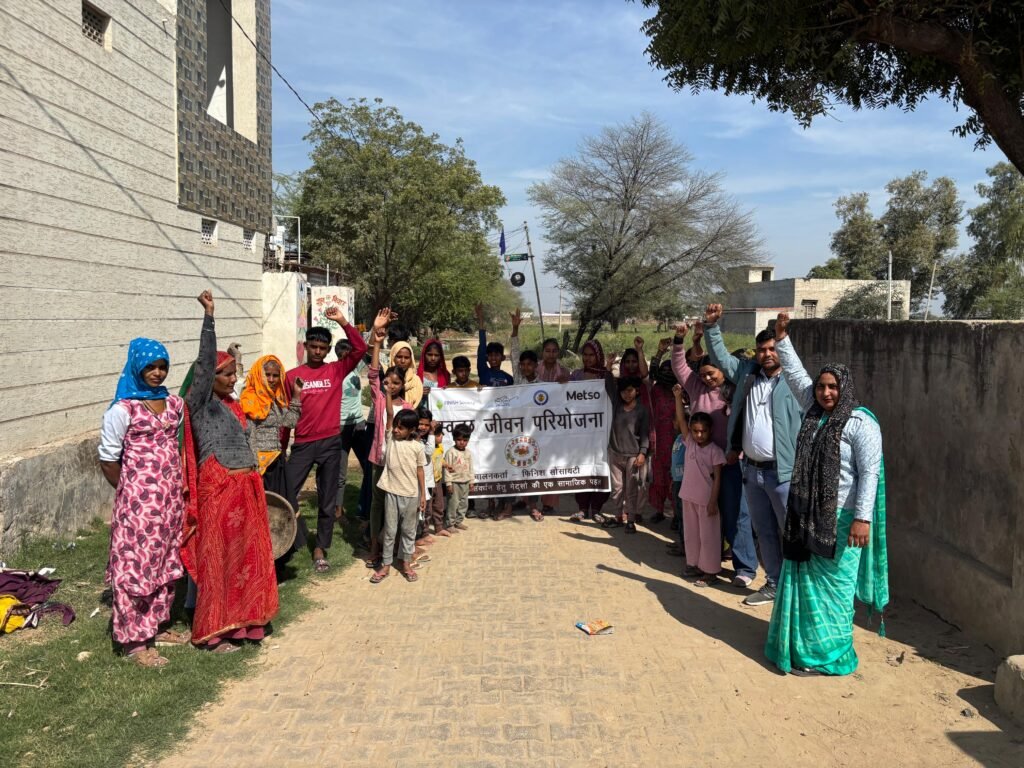
The Swachh Jeevan Project, supported by Metso India, is based on a simple idea: if we want clean and healthy communities, we must start early—and we must start together. Sanitation is not just about toilets or waste bins; it is about habits, dignity, and responsibility that grow over time. That is why the project works closely with schools, teachers, children, and local communities, treating sanitation as a shared journey rather than a one-day activity.
FINISH Society plays a key role in this process. Working on the ground, it connects institutions with people, bringing practical knowledge and community trust together. The approach is clear—solutions should be local, inclusive, and owned by the people themselves. Children, especially, are seen not just as learners, but as leaders of change. This belief came alive last month January, in Sankhlakh village of Alwar district, Rajasthan.
The village primary school had been facing many challenges. Broken classrooms, lack of seating, poor cleanliness, and unmanaged waste had slowly started affecting children’s attendance and motivation. Although systems existed, delays in repairs meant that sanitation became something everyone noticed—but no one acted on.
That changed because of Karan Sharma, a teacher who believed that responsibility cannot be postponed. Instead of waiting for approvals, he began small repair work on his own. His actions inspired others. Village head Kallu Khan, School Management Committee president Mehar Singh, and local residents came forward. Through shramdaan and local support, the school slowly began to improve. Still, sanitation remained a concern.
This is where the Swachh Jeevan Project stepped in—not as an external program, but as a partner. Teachers, parents, children, and community leaders sat together and discussed what cleanliness really meant for their village.
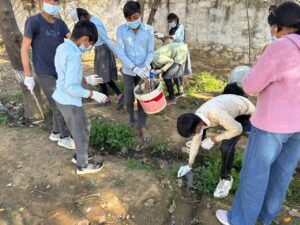
On Prakash Parv, a cleanliness drive was organised at the school and the Gurudwara. Children cleaned alongside elders, teachers worked shoulder to shoulder with villagers, and the FINISH Society team joined in. It was not about instructions it was about example. The message was simple: sanitation is service, and service belongs to everyone.
The real shift happened when children took charge. They started a “Halla Bol” campaign, visiting homes and politely asking families not to litter. Some people hesitated. The children responded by sitting outside and saying, “We won’t go until you promise to keep the village clean.” Their honesty and determination worked. People listened not because they were told to, but because children reminded them of their responsibility.
Soon, the village committed to waste segregation, composting wet waste, safe handling of dry waste, and Panchayat support. Sanitation stopped being a task and became a shared value.
The same spirit was seen at Government Senior Secondary School, Desula, where over 400 students and teachers took a cleanliness pledge during a Swachh Jeevan awareness campaign.
These stories remind us of one thing: change does not always begin with policies it often begins with children who care. When young voices speak for sanitation, they don’t just clean streets and schools. They shape habits, values, and the future itself.
