
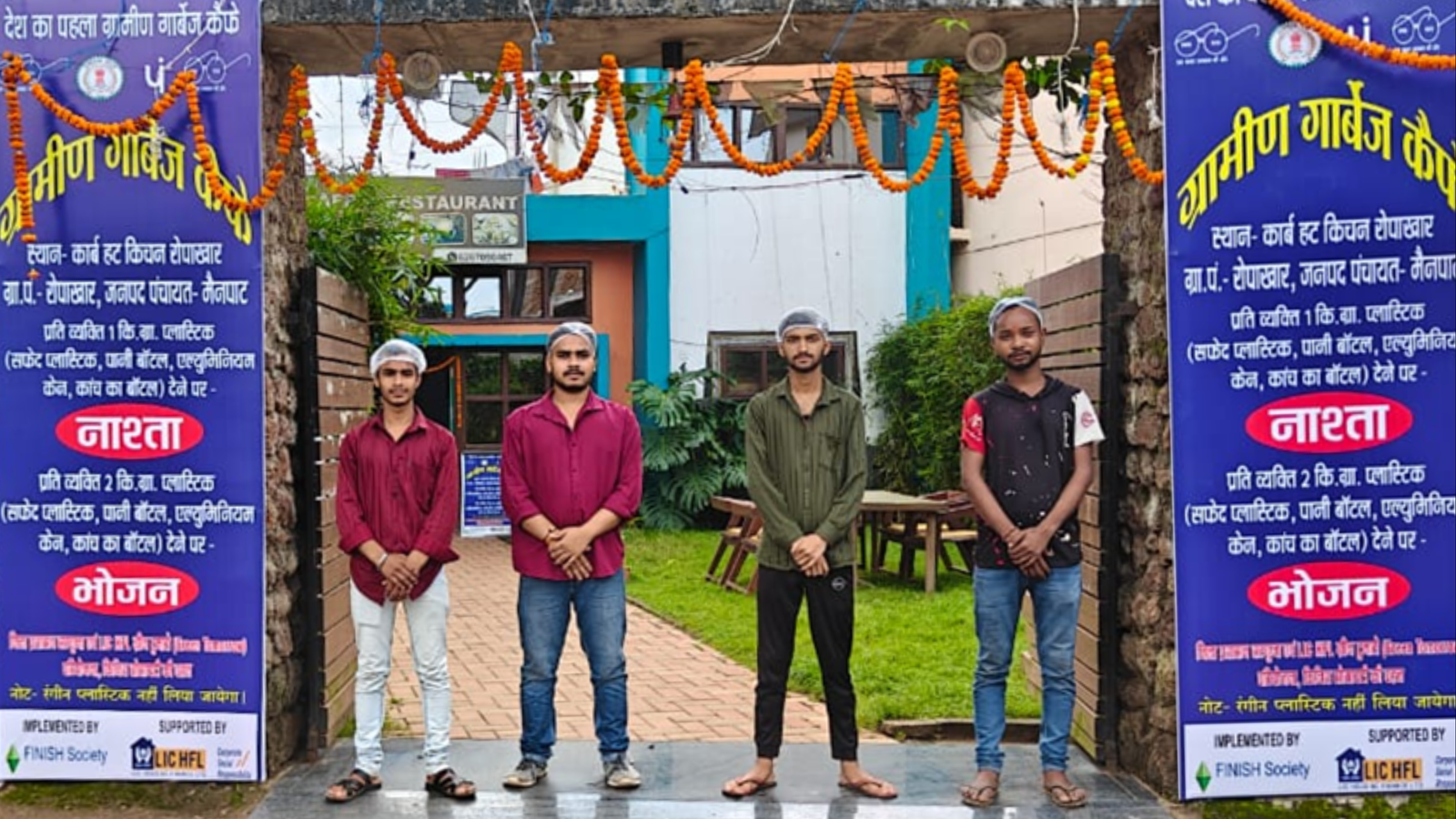
Rural Garbage Cafe – Where Waste Turns into Taste
India’s First Rural Garbage Cafe – Where Waste Turns into Taste In the misty green hills of Mainpat, a picturesque destination in Surguja district of Chhattisgarh, mornings bring not just sunlight but also the fragrance of change. The country’s first Rural Garbage Cafe has opened its doors at Gram Panchayat Ropakhar, offering a simple bargain: bring your waste, get a meal.
The concept couldn’t be more straightforward. Drop off one kilogram of plastic bottles, aluminum cans, or glass containers, and breakfast is served. Double that to two kilograms, and you’ve earned yourself a complete meal. No cash required—just consciousness about the environment.
Here, when a villager or tourist walks in with a sack of plastic bottles or tin cans, they don’t just carry waste—they carry responsibility and the possibility of transformation. In exchange for 1 kilogram of clean plastic bottles, MLP packets, or tin cans, they receive a hot meal of samosas, kachoris, or vada with curry. For 2 kilograms, a full thali awaits them—dal, rice, roti, and vegetables. Food in exchange for waste. It sounds unusual, but it is here that a quiet revolution has begun.
A Partnership for Change: This Cafe is not a standalone idea—it is part of a larger vision. With the support of Surguja District Administration, LIC-Housing Finance Ltd. (LICHFL) through the Green Tomorrow project, and FINISH Society, the initiative aims to create a model of scientific waste management, environmental awareness, and sustainable livelihoods for rural women.
The Role of Akash Ji – Food with a Purpos: The cafe owes much of its success to Mr. Akash Prajapati, the operator of Curb Hut Kitchen. With years of restaurant management experience, Akash and his dedicated staff have ensured that the meals served here are not just wholesome but also filled with warmth.
Their contribution has made the Cafe more than just a dining spot—it has become a space of belonging, where villagers feel respected, valued, and part of a larger movement.
A New Way of Thinking: The cafe serves a dual purpose beyond waste collection. It’s transforming how both tourists and locals perceive environmental responsibility. Visitors who once might have carelessly discarded bottles now hunt for recyclables, turning cleanup into a treasure hunt with edible rewards.
Launched as part of the nationwide Swachhta Hi Sewa campaign and Swachh Mahotsav 2025, the café embodies the principle that cleanliness isn’t a seasonal effort but a daily commitment. The administration envisions this model inspiring similar initiatives across rural and tourist destinations nationwide. When a young boy munches on a samosa and proudly tells his mother, “Next time, let’s collect more bottles so we can come here again,” it is not just about a snack. It is about instilling a habit—of collecting waste, of respecting the environment, and of linking dignity with responsibility.
The Cafe is proof that cleanliness is not just about sweeping streets—it is about dignity, livelihoods, and environmental responsibility. It shows how a small village can become an example for the whole country.
The Taste of Hope: Today, the rural Garbage Cafe of Ropakhar has become more than just a Cafe—it is a symbol of change, the fragrance of cleanliness, and a new path to sustainable livelihoods.
What makes this café particularly brilliant is its simplicity. No complex technology, no hefty infrastructure—just a direct exchange that makes environmental stewardship tangible and immediately rewarding. Every plastic bottle traded represents one less piece of litter marring Mainpat’s natural beauty.
Every steaming plate, every thali served, carries with it the reminder that waste can be turned into opportunity, and that together we can build a greener, cleaner, and more respectful tomorrow. This is not just a story of waste management—it is a story of hands that sweep, steps that walk the lanes, and minds that choose to turn every sack of waste into a brighter future.
